Tag Archives: artists

3 Comments

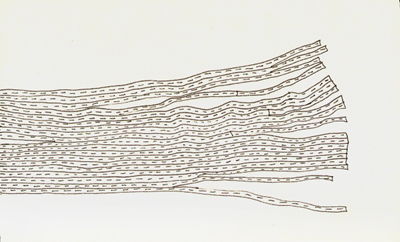
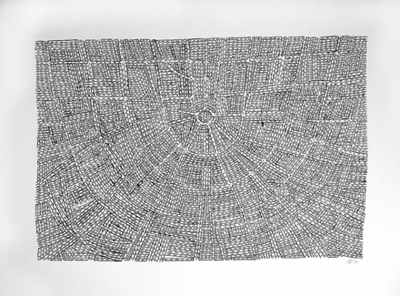
Unfortunately, I haven't been able to find out all that much about Dutch artist, Anita Groener but I like the way her work alternates between spareness and complexity.

Anita Groener - Labyrinth IX
Anita Groener: Labyrinth IX

Anita Groener - Freeway

These two works form part of the Crossing series. Over the space of three years Groener drove about 12,000 kilometers between The Netherlands (her homeland) and Ireland (her adopted country) and these regular road trips became a huge influence on her studio practice. She describes this series in the following way:

The verb Crossing signifies movement, a movement which is not uniform but which is drawn back and forth. In my drawings I try to capture the delineation of movements of thought processes occurring in space and time, between here and there, between the point of departure and arrival. The journey of the line marks the surface turning it into visual patterns. What you see is a physical manifestation of the layers of routes and directions taken in this process, revealing its manifold meanings.

10 Comments

I've found so many stories and links that I'd slung into the folders on my desktop, that the only way to get through them is to do a bit of a round-up. Maybe I'll make this a weekly feature since I always seem to find far more than will comfortably fit into my regular blogging schedule.

Links

Nick from The Boat Lullabies blog found a fascinating photographic history in a thrift store.

Bob collects pencils - lots and lots of brand name pencils. Now, I like pencils as much as the next artist but this strikes even me as a tad odd. It is a well done site though - I like the regularity of the design and you know what, Bob's right, these pencils are kind of beautiful when you see them all en masse.

Photographer Helga Steppan, organised all her belongings by colour - the results are stunning.

The Mega Penny Project is a handy way to visualise large numbers.

Such a clever idea - people who've matched their screensavers to the background behind their computer so that it looks as though their computer screen is transparent.

I adored this short animation called Hiccups 101 by Jessica Sances.

Craig Robinson has done a series of what he calls 'lollipops' - abstracted computer drawings of musicians and pop stars. I was fascinated by how little I needed to identify some of them. I listen to a lot of music on my computer but I don't watch MTV particularly, so I was surprised at how often the names of musicians instantly popped into my head - even ones I'd never heard sing. Even when I couldn't remember the name, I'd often still know who it was meant to be - I guess most of us are steeped in celebrity culture whether we want to be or not.

It's not art related but this YouTube video of a small child trying to communicate something important to his increasingly giggly father makes me laugh hysterically every time I see it.

People

Regular commenter, Tina Mammoser from The Cycling Artist has a good post about avoiding scams which was inspired by this post by Alyson Stanfield.

Ulf Nawrot who did the post-it drawings that I linked to back in August, kindly sent the following clarification on his process:

All my post its were drawn while doing something else in an ad agency: phone calls, meetings, brainstormings-if you are looking close you will find lots of valuable information hidden on these notes like phone numbers, comments etc.-but you will also find my different states of mind, anger, distraction, making fun of people...the whole thing started subconscious like the swirls and ornaments a lot of people draw on desks and everything else in reach when they are doing phone calls.I have been collecting my post its since 1993 and at this point there must be around 25.000 of them.

25,000 of them - wow, way to go, Ulf!

9 Comments

Sheree Rensel commented on this post:

I totally agree with comments presented. I too realize that blogging is very beneficial for aspects related to motivation and building an audience. However, I want to know how blogging has helped your INCOME. How has blogging increased your sales or increased the money you get to support your art?
That is the topic for which I am REALLY interested.

Sheree Rensel - Blue
Sheree Rensel: Blue

Ah Sheree, the answer to that would be 'not at all' since I'm not currently set up to make money off my art. I am slowly coming to terms with the idea that maybe I should try to make some money from my work but it's something that I'm still internally struggling with. For a long time I believed that my work was completely unsaleable because of the fragile and often temporary nature of the things that I made. That's no longer as true as it once was but I'm still trying to reprogramme my brain on this issue. I plan to write more about the issue of money and artists in the future.

That's a long-winded way of saying that I'm probably not the best person to answer your question!

Fortunately, Katherine from Making A Mark left a long and detailed comment, some of which addressed this issue. I'm reprinting the relevant bits here:

Kirsty - I absolutely agree a blog should be for yourself. I personally am less on reading 'commercial' blogs where people are blogging for a business which is not their own or because they think it's 'what you have to do' to sell art. These blogs often seem to run out of steam after a bit.

Blogs which just present work for sale (as one e-bay) are fine by me - but IMO they work so much better with a few details about why the artist chose to paint the picture...

...Re. last comment, here's my observation. The people who appear to sell consistently using their blogs as part of their marketing are those who do good quality work. (By which I mean good quality work will find a buyer if you market effectively). What a blog maybe does for them is speed up the process of increasing awareness - and then once you've attracted people who like watching what you produce then you have a ready market of people who are more likely to buy.

I would agree with this, personally I prefer blogs where the artist is not solely focused on selling, although I have no objections to being gently reminded that they've updated their Etsy shop or that a particular piece is available in a commercial gallery. In fact, I definitely think that artists should do that, where applicable.

However, the artists who seem to have the most success online usually seem to take the long view. For example, Camilla Engman is an artist who's had a lot of success online and she seems to have built up her sales in a gentle and organic way. She cultivates an audience for her work by having relationships with the readers of her chatty and informal blog and maintaining an active Flickr presence including starting a new group called Organised Collection recently. And of course, she makes excellent and consistent work that she offers at a range of prices from affordable calendars and prints to the more expensive original paintings.

Camilla Engman - Collection 2
Camilla Engman: Collection 2

Engman is a lovely example of how to operate as an artist in the offline world too. We had a show of her work at the Here Gallery and she included a couple of packs of her little prints as a thank-you gift for those of us who'd helped with the show. She's the only artist I can recall who did something like this and it was certainly appreciated by those of us who unpacked and hung her show, since we were all volunteers and none of us were getting paid. Getting curators and gallery people on your side never hurts!

Get more help
If you'd like more information about building your online presence, check out the free resources section.

I am also available for online consulting if you need one-on-one help.


2 Comments

Sorry about the lack of posts over the weekend, we had visitors and I just didn't get a spare minute to update.

I'm a big fan of Tara Donovan's art. I love the way she uses vast accumulations of objects like polystyrene cups, pins, sheets of glass and drinking straws to make dense, layered sculptures. She stacks the objects but then lets them find their own pattern and form.

Tara Donovan - Haze
Tara Donovan: Haze, 2003

I find the way her work refracts colour very interesting, she often uses translucent materials that become subtly coloured when layered in such large quantities. It seems to me that there's something about the importance of revealing the hidden in her work.

Tara Donovan - Haze
Tara Donovan: Haze, detail, 2003

I must admit that I was envious when I saw her huge block of pins - although I just don't work on that sort of scale, I love that she does. The pins aren't held together with anything other than gravity and their own interlocking chaotic mass.

Tara Donovan - Untitled, 2001
Tara Donovan: Untitled, 2001

If you want to read more about her work, there's a good review here by Paul Brewer and an artnet interview with Donovan here.

Sorry about the odd formatting on a couple of the images in this post, I can't work out why it's doing that or how to fix it.

8 Comments

Artist Annie Vought meticulously cuts paper to make her beautiful and witty wall pieces. Her recent work has concentrated on writing, while previous work explored the human body through cut up anatomy drawings.

Annie Vought - To Do
Annie Vought: To Do, 2006

As a compulsive list-maker, I just adore the absurdity of this piece - just think of the hours it must have taken to cut away the paper from something as transitory and throwaway as a to-do list. She's clearly a woman after my own heart!

The use of shadows in these works interests me and I see obvious parallels with my own thread drawings where the shadows also work to complete the image. Unsurprisingly, it also delights me that she uses pins to attach the delicate cut paper to the wall.

Annie Vought - Slightly
Annie Vought: Slightly, 2006

Kirsty Hall, art, thread drawing
Kirsty Hall: Thread drawing - work in progress

----

Vought is also involved in a radical form of curating in public spaces through her involvement with the Budget Gallery.

The Budget Gallery is not in a specific place. We don’t have a building, so we’re beyond low-rent. We don’t even pay rent. We set up our gallery in co-opted public spaces like vacant walls and fences. The shows are carefully co-ordinated, prepared, and publicized. The pieces are displayed much like a traditional gallery. We paint walls white, install art works and labels. We announce openings that are attended by hundreds. Refreshments are served and one can often hear jazz playing in the background. Of course, this is no traditional gallery - it’s all taking place on the sidewalk. In the end it’s a blend of all the greatest things about attending an art show, a garage sale, and a block party rolled into one.

Check out their project rules:

1. We use underutilized public spaces for our exhibitions.
2. If work doesn’t sell at the opening, it stays, in public, unguarded, for at least 1 week.
3. After the opening the unguarded work is sold on the honor system.
4. All art work in our shows will be sold, stolen*, or vandalized** and we can not pre-determine the outcome.
5. Our commission is arbitrary, optional, and determined by the artist.

*Having a work stolen is the highest honor of the Budget Gallery because it means someone wanted the work so badly they were willing to abandon personal and societal mores to acquire your piece of art. In our eyes, this may be considered a more valuable compliment to you than a simple monetary transaction.

**We suggest you consider vandalism a form a collaboration.

I find that a fascinating concept but also very challenging: it certainly brings up a lot of issues around letting go of control.

How would you feel about your work being shown in these circumstances? Could you deal with it? Would it upset you to have your work stolen from an unguarded public wall? Would it upset you more to have it vandalised?

I think I would have to make work especially for that space, with those aims in mind because if my regular art was stolen or vandalised I'd be upset. I actually had my degree show vandalised and even though I'd known beforehand that it was a possibility because of the extreme delicacy of the piece, I still had to go and cry in the toilets for a while!

8 Comments

I promised a round-up of the comments that other artists have left about their experiences with blogging and here it is, although much later than I'd planned...

Usiku from Writer's Whirlpool writes:

Blogging has allowed me to reach and meet people that possess a range and depth of human experience, yet it reminds me there is a sameness to us all.

What a lovely sentiment, Usiku. One of the things I love most about blogging is the way it can encourage people reach out and help each other - I've seen everything from people offering words of sympathy to people giving real life support such as organising online baby showers, paying medical bills for ill bloggers, supporting families through bereavement or other difficult times, raising funds for charities or coming together to sponsor art projects.

I get so fed up of all the negative portrayals of the internet because it just doesn't reflect my online experience. Blogging is frequently portrayed as a selfish and egotistical thing to do but I've often seen it used as a powerful and meaningful way to connect with other people.

Michelle from Pencil Portraits brings up a point I hadn't considered:

Another benefit to blogging (for me anyway) is that when I am focussed on updating my blog regularly I am more productive in my art, because I can't wait to post it. But I have noticed a definite correlation in lower productivity when I get slack about updating my blog, so even though it takes a bit of time to post, it is definitely worth it for so many reasons.

I love the idea of using a blog as a way of giving yourself motivation - great idea, Michelle!

Mark from Graf Nature Photography: Notes From The Woods writes:

I use my own blog for connecting with viewers of my own work, as well as exploration of my own feelings and analysis of why I do what I do. Turns out, a lot of readers often wonder the same about their own work. Sometimes it helps just to write things down to work out what you are thinking.

Oh, I couldn't agree more, Mark. I've always used writing, and indeed, making my art, as a way to work out what I'm really thinking and feeling. I've always written about my work a lot so writing on a blog wasn't that big a step for me. I think that so many artists work in isolation and having that link with viewers and other artists can be so helpful - just to get an extra set of eyes on the work, if nothing else. One of the reasons I like exhibiting is because of the dialogue and additional perspective that you can get on the work - I guess you can think of blogging as an informal sort of exhibiting process.

That leads us neatly onto Katherine from Making A Mark, who makes a similar point:

1) Blogging can also be thought of as the virtual equivalent of the 'private view'. Thinking of it like that helps people to pitch their remarks - one to one, helpful, informative - but also professional.

2) I like supporting galleries, exhibitions and other artists on my blog - and they come back and tell me they've sold work as a result. More co-operative support for one another would give a nice artistic twist to "the wisdom of crowds"

3) It should never be under-estimated how much slog blogging can feel like at the beginning - but it is habit-forming and it does get easier the more you do it and the more frequently you post. The growth in visitors is also exponential - my second tranche of 50,000 visitors arrived a lot more quickly than the first 50,000!

Woah Katherine - 50,000 visitors! I can't even imagine that yet but maybe I'll get there one day. I do agree that blogging is habit-forming although I think a lot of bloggers get dispirited at the initial 'writing in a vacuum' feeling. I think you've got to be writing for yourself as well as an audience - if you're getting some personal reward that isn't dependant on other people reading or commenting then it's a lot easier to continue. In that respect it's a lot like making art.

Tina from The Cycling Artist blog brings up the importance of regular blogging:

I've been blogging a while but only recently made a pact with myself to do it *every day*. Strangely enough it gets easier. I used to wonder what to blog about, what was interesting enough to write and direct my fans, collectors and other artists too that wasn't just a rambling self-journal. I didn't want it to be for artists only, so had to find a happy balance. Sometimes I get on a bit of a soapbox but hopefully not too often. :)

It's about 20 minutes each day typing up, copying into two blogs (I duplicate my tina-m.blogspot.com blog over to my MySpace account too). It's a nice start to the day actually. And I've just recently found out about RSS feeds and used feedburner.com to set them up - in case any other artists are as mystified about it as I was!

Tina, I'm interested in the fact that you duplicate your blog over at MySpace - do you find using MySpace works in terms of visitor numbers? I've been wondering about setting up an 'outpost' over in MySpace but I don't want to commit to something that's going to take lots of time.

Get more help
If you'd like more information about building your online presence, check out the free resources section.

I am also available for online consulting if you need one-on-one help.

For some reason, I seem to be very attuned to art made from books this week. Cara Barer is a photographer who often works with old discarded books, which she soaks in water and shapes into new forms before photographing.

She says:

My photographs are primarily a documentation of a physical evolution. I have changed a common object into sculpture in a state of flux.

Cara Barer - Found Reference

This one really stood out for me, it reminded me strongly of a mushroom, so it was no surprise to find that she'd also taken pictures of fungi.

Cara Barer - Mushroom Dust

Link found on the Daily Poetics blog.

4 Comments

Brian Dettmer makes wonderfully intricate work using found books and maps, which he carves into to reveal the illustrations within.

Brian Dettmer
Brian Dettmer - Untitled

Needless to say, I love the obsessive quality of this work but the results are stunning too - he's clearly got a strong eye because the pieces also work well as collages. I particularly love his map pieces where he's dissected maps leaving only the road systems, which he's layered over each other to make works that seem far more related to anatomy books than cartography.

Brian Dettmer
Brian Dettmer - Untitled

There's an interesting little discussion of his work here, with comments ranging from 'wow, that's amazing' to 'it's horrible because he's destroying books'. What do you think? Is it a valid form of art if you destroy/seriously alter other creative works to make it? I think so but as a confirmed bookworm, I also understand the resistance to reusing books in this way.

Link found on Something To Say

I love Abigail Percy's jewellery and regularly read her blog.


Geranium Outline Earrings..., originally uploaded by Abigail Percy.

Her latest blog post has some simply gorgeous photographs from a little shop she discovered during a recent visit to Paris.


Paris ~ shop..., originally uploaded by Abigail Percy.

It's been years since I last went to Paris and now I have yet another reason to want to go - I love shops like this.

You should check out her Flickr too, the sympathetic way she photographs her jewellery is well worth noting.

Ohh, I just discovered the Daily Poetics blog because they'd linked to The Diary Project. What a find! I love the clean pale aesthetics of the site and the high quality of the work they're linking to and the use of quotes as post titles - there's lots to fill up your eyes and mind with.

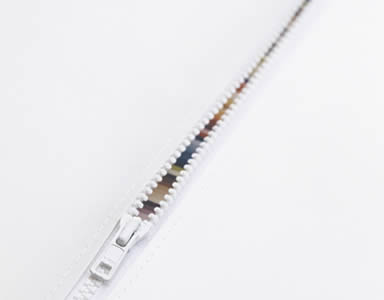
I particularly loved this wallpaper piece from Tracy Kendall.

Tracy Kendal - Fly On The Wall

Unzippable wallpaper - I love it! Her other handmade wallpapers are gorgeous as well. This is wallpaper very much as an installed artpiece, something I've noticed quite a bit of lately. Although of course, this is an old tradition, originally all wallpapers were handpainted or handprinted and it wasn't unusual for them to be individually designed for rich clients.