Blog

4 Comments

I try to do a promotional or marketing thing every day. That sounds daunting but it can be quite a small thing and it doesn't always involve contacting people. Today I'm working on the 'alt tags' on my images. I kept reading about using alt tags on images when doing research for my Artists Online series but I just wasn't quite getting it. Then this morning I read this article, which clearly explains what they are and why you should use them and it suddenly clicked.

As an experiment I went into Google Images to see how often my work appears and the answer appears to be 'never'. Oops! Oh, I'm there a couple of times, mostly when people have linked to my curating work but images of my work - er, not so much. So I'm doing yet another of my little experiments; I'm altering the alt tags on my images in this blog, so that they include my name and descriptions of the work. And when I've remembered how to do it, I'll go into the gallery pages and check all the images there too. I'll let you know if it makes a difference to my Google results.

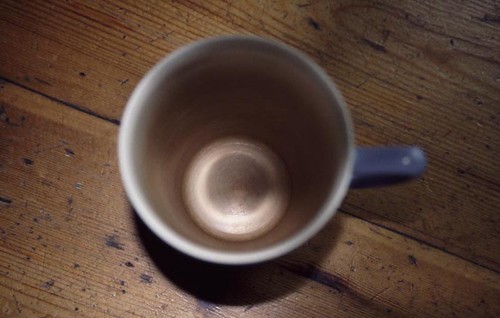
Kirsty Hall - Stained Cup
Kirsty Hall - art, photograph of Stained Cup

About five years ago I went through my mother's cupboards and took a series of documentary photos of the objects I remembered from my childhood. This photo is my favourite from the series.

The cup in question is a plastic cup from my granny and grandad's old caravan. The caravan - and my grandparents - are long gone but the stains of their endless cups of holiday tea remain.

4 Comments

Sorry for the quiet couple of days - my brother is getting married next weekend and I had to spend some time getting myself organised for it, plus I desperately needed some studio time. That studio/computer/life balance can be a bit tricky sometimes, can't it. It doesn't seem to matter where I am, there's always a little voice in the back of my head telling me that I'm in the wrong place and I should be doing about five other things!

Right, I've got a big pile of stuff that I've been collecting, so I thought I'd put some of it together in a links post.

Sister Diane over at the Craftypod has a real blast from the past with this great photo essay about Spirograph. It's a total nostalgia hit.

Lindsay Landis has a tutorial about taking professional photos of small items that some of you might find useful.

Architecture blog, BLDG has a fascinating article about the allure of underground cities.

A moving article about designers who are working on creative solutions to help homeless people from the very intriguing WebUrbanist blog. I particularly loved the amazing inflatable buildings that run on the waste air from buildings.

This is a ridiculous story about a 13 year old boy who was suspended for three days by an Arizona public school because he sketched a picture that resembled a gun. The drawing is reproduced in the news story and I have to say that it looks far more like a plan of a building to me than a gun. Ha, I'm betting half of us would get ourselves suspended from school too! I used to draw mushroom clouds all over my school text books, it didn't mean I fancied a bit of nuclear war.

I enjoyed this story from The Guardian about humour in art. It mentions the work of Hyungkoo Lee, whom I hadn't heard of before but whose work tickled me.

.......................

I'm behind on replying to the blog comments but I will get to it in the next few days. I do read and appreciate all your comments, even if I don't manage to respond to them straight away.

Apologies to Annie Ok for misspelling her last name - apparently it's Ok, not OK. I've changed the blog post in question, Annie.

Thanks go out to the following people, who all linked to here or to the Diary Project:
Abstract Inner Visionz
Natural Logo Design Blog
Max Lieberman
NoRaHzArT
Maramcp
Lindsay Obermeyer
Lisa Mikulski
and a special thanks to Tina Mammoser, who has been repeatedly pimping me in both her blogs.

Thanks folks, I appreciate it and if I've accidentally missed anyone out, I apologise.

OK, better get off and have a shower and then get back into the studio...

4 Comments

Alyson B. Stanfield has an excellent podcast this week about the importance of assessing art venues.

Considering your exhibiting strategy is always worthwhile. The artworld judges you not only on how often you show but also where you show and who your fellow exhibitors are. Not all exhibitions are created equal - a selected group show in a well regarded gallery usually rates much higher than an open submission exhibition with a high proportion of amateur artists.

Do you have rules for showing and places you won't consider? If you don't have any showing rules, then it's definitely time you sat down and did some strategic thinking about this issue.

Personally, I won't apply to exhibitions that charge an upfront non-returnable application fee unless the show is extremely prestigious or has some other compelling factor. For example, I'd consider putting in for the Jerwood Drawing Prize even though they charge an application fee because it has national exposure, a proper catalogue and is very well regarded in the British art scene. I chose not to apply this year but if my drawing continues to evolve then I might consider it next year. I know that my chances of getting in would be low because they have a lot of applications and the standard is high but even applying would feel like a step up to me.

There are a couple of other UK juried shows that I feel that way about but they're fairly few and far between. Usually they'd need to be in an extremely good venue that I couldn't otherwise get into at this stage in my career or have some other major advantage.

That said, I'm completely fine with paying a small fee to take part in things like local art trails. Now, if you look at it logically, this doesn't seem to make sense - I'll happily bung £15 to a bunch of artists organising a local event, while I'll scoff at a gallery charging the same amount in an application fee.

However, there are couple of good reasons for this.

Firstly, I'm just more comfortable with artist-led projects - at heart, I'm a grassroots kind of girl! I know exactly what it's like to put together projects on a complete shoestring and believe me nobody's getting rich doing it! Usually you're doing well if you break even.

But it's not just about supporting local artist-led initiatives out of the goodness of my heart - art trails often have a lot going for them. Our local art trails get fantastic visitor numbers and good coverage in the local media. Plus, they can be a great way to build up a local following; add to your mailing list; attract local visitors to future shows and make vital connections with the movers and shakers in your regional art scene. On balance, I'm more than happy to pay for that, there's enough value in the exchange to make it worth my while.

Secondly, artist-led projects usually don't want money from you unless you're accepted, whereas a lot of galleries seem to think that it's completely fine to charge you money for the privilege of them looking at your work.

I know from my curating experience that having that kind of show can be an excellent money spinner for galleries. You get the fees from all the artists who've applied, not just the ones who're eventually selected. Then, because you're showing a lot of artists you get a bigger than average crowd when the artists invite all their friends and family. In turn, large crowds give you a higher chance of generating big sales. Believe me, I can completely understand why galleries put on these kind of shows - I'm just not sure that it's my job as an artist to subsidise them.

I'm not saying that artists should automatically rule out every exhibition that charges an application fee but you should definitely consider the following things:

  • Is the venue far enough above your current level that it would boost your profile considerably?
  • Is there a proper catalogue?
  • Does the show have a good reputation in the art world?
  • Does the show get good media coverage?
  • What are the visitor numbers like?
  • Does the show traditionally have an excellent sales record?
  • Is there a prestigious guest list for the private view?

As with everything where money is involved: caveat emptor! Know what you're getting into and why, understand your reasons and don't apply to or accept shows out of sheer desperation.

4 Comments

Sue Favinger Smith kindly pointed me in the direction of this article by Clint Watson about the importance of not relying too much on your Google ranking. He makes some good points and the idea of diversifying is something I'll be following up in later articles.

Sue's blog, the excellently named Ancient Artist, is also worth reading; she writes deeply and honestly about the emotional challenges of trying to develop an art career when you're over the age of 50.

Sue Favinger Smith - Elements Triptych, oil painting
Sue Favinger Smith: Detail of another Elements Triptych

87 Comments

The next section of my Artists Online Series will look at blogging.

Blogging can be a very useful promotional tool for artists. It's not a substitute for having a good online portfolio or for doing lots of offline work on your career but it can be a useful addition. Not convinced? Here are my reasons:

Blogging Raises Your Google Profile

Since Google prefers fresh content, regular blogging tends to push your Google results higher. Other people linking to your blog posts also increases your Google profile. Make sure you're blogging under your professional name to get the full benefit of this.

It's not just Google that likes new information: people are also far more likely to come and visit your website if you've got constantly changing content. How often is someone likely to blog about your really cool art? Once or twice tops. However, if you're regularly writing good blog posts then you don't just get repeat visits, you may also get repeatedly linked, which means... yes, better Google results! Rinse and repeat...

Blogging Reminds People You Exist

Promotion isn't something that you do once and then it's done forever: it's more like exercising - you need to do it little and often!

Blogging helps with that; if people are constantly coming back to read your blog, then they're naturally more aware of you. You don't even need to constantly talk about your own art; just by visiting regularly they're getting a gentle little nudge that you and your work exist.

Blogging Improves Your Website Numbers

Being able to say to a gallery or a funding body, "well, last month I had X number of visitors to my website" puts you in a better negotiating position because it proves that your work is already popular.

Of course, online popularity won't substitute for offline experience like exhibitions, publications and residencies but it can add to it. Last year I was told by someone in the know that if you're filling out a funding form and it asks about prospective audience audience numbers, you should definitely include your web hits. This had never even occurred to me but apparently Arts Council England counts online viewers as bums on seats!

Blogging Connects You With People

This is one of the most important reasons to blog: I've met some completely amazing people through blogging and some of them have turned into offline friends.

Blogging can help you find a group of people who support your art. This can include other artists, gallery owners and curators but equally importantly it can include lots of non-artists who are willing to be advocates for your work.

Cultivating a group of people who like your work is vital for any artist. Supporters will turn up at your shows, cheer you on, blog about you, tell their friends and even sometimes buy your work. Supporters are great!

Of course, you should also be cultivating a group of supporters offline through using things like mailing lists, but finding sympathetic people who genuinely want you to succeed can often be easier online.

Blogging Gets You Out Of The Garret

Many artists work in isolation and blogging can help reduce that all pervading sense of invisibility. My own studio is in my home: this is definitely the best option for my art practice but it does mean that I don't always get as many opportunities to connect with other artists as I'd like. When I graduated, I did feel very isolated, lonely and out on a limb. I lessened that by starting a artists' group with my college friends but it was a lot of work - I was the chairperson, general organiser and one of the main curators for our group shows. Now I get that all important sense of connection through blogging and online social networking spaces with a lot less effort. For real world connections, I have the Spike Island Associates Programme, local private views and my part time jewellery course.

Even if you are in a studio, there aren't always as many opportunities to connect deeply with the other artists as you might expect - they're busy, you're busy and you might not have that much in common anyway. But online you're not limited to your geographical surroundings - with a little effort, you can find a peer group with whom you truly click on an artistic and intellectual level.

Blogging Breaks Down Barriers

Sure, there's a hierarchy in the blogging world but there's also a surprisingly level playing field. You can leave comments in the blogs of 'far more important' bloggers and they'll generally reply to you on an equal basis. I've spoken in blog comments to published authors and more established artists in a way that I would never have dared to do in other mediums. Blogging opens the channels of communication in a way that feels comfortable to me: I feel much more equal online, I'm less intimidated by what someone's done and just respond to what they write and how they come across. Blogging makes me braver and that has translated into my offline promotion efforts.

In the same way, blogging can make you seem more approachable and human to people who are interested in your art. Why not do the next generation of artists a big favour and help to break down the myth that artists are all crazy, ear chopping introverts or outrageously drunken drama queens! Of course, if you do happen have that kind of personality then you might as well play to the gallery because I've been told several times that collectors just love that sort of thing...

You Can Reach A Wider Audience

People who might not be comfortable visiting a gallery are often happy to look at your work online, especially if you initially engage them with a blog post that's relevant to them. Through blogging you can often reach people who wouldn't otherwise consider looking at your art and those people can sometimes end up being incredibly supportive.

Through blogging, you can also reach a global audience who might not otherwise be able to see your work. To date, The Diary Project has had visitors from 39 countries, including places like Guam, Brunei and Malaysia, while this site has had visits from 29 countries.

I'm not saying this to boast - just the opposite, in fact. My point is that I'm not important yet. I'm very much an emerging artist rather than a well-known one: I'm only five years out of college and although I've had a steady stream of group shows, I've only had one solo show. I'm certainly getting established, through lots of hard work both on and offline but I've not exhibited my work abroad yet and I'm probably still be a couple of years away from doing so. [Although, do feel free to offer me an international show - I'm totally OK with moving it up my agenda!]

So it's quite incredible that people from all over the world have already had the opportunity to see what I do. This would never have happened without the internet - it simply isn't possible from my current position in the offline art world.

Blogging Empowers you

By being active online you take a little bit of the power away from the artistic 'gatekeepers' and put it back in your own hands. You're not just sitting around twiddling your thumbs waiting to be discovered - you're out there building an audience and creating your own opportunities.

Of course, the gatekeepers aren't ever going to be redundant - artists still need gallery owners, exhibitions, audiences, collectors and funders in the offline world. I'm not trying to denigrate the artworld or its gatekeepers but particularly in the early days it can feel as though you're banging your head against a brick wall and getting nowhere. I'm not complaining about that either; there's absolutely no substitute for paying your dues and we all have to knuckle down and do it. However, a little bit of encouragement online can keep you going when it feels as though no one else knows you exist. You're still going to have to engage with the artworld offline but blogging can help to increase your confidence to deal with those interactions.

Blogging can also build confidence to take bigger and bolder steps online. I was blogging over on Livejournal for 3 1/2 years before I got my website up. Setting up a website felt huge and intimidating and quite beyond me at the time, whereas setting up a blog was quick and easy. Blogging was undoubtedly a helpful first step towards finally getting my website sorted.

Blogging Strengthens Your Voice

When you're blogging about your own work, you have to think about your work. You have to put into words what you're trying to do and that's damn good experience when you need to write artists' statements and press releases. A lot of artists hate writing about their own work and find it excruciating - blogging can help you get over that.

Blogging Can Generate New Opportunities

I know people who've been published or been offered exhibitions because of their blogging. It hasn't directly happened to me yet but I have approached people I know in the online world and scored opportunities that way.

Blogging Is Cheap

Blogging costs virtually nothing compared to other forms of promotion like postcards, poster and ads but it can be very effective. Writing a good blog post won't cost you anything except time, energy and a few pence for internet access and the electricity to run your computer but it can get distributed all around the world. Not only that but when people link to you, the information is usually replicated on their blogs plus they also usually link back to you. It's like you sent out a single postcard and someone photocopied it and gave it to all their friends. As we all know, word of mouth can be a powerful thing. Who knows how connected some of those people might be? Who knows how large the audience on their blog is?

Blogging is Fun!

OK, obviously I'm biased on this one but I think blogging is a blast. It's an effective promotional tool for me but it never feels like work because I enjoy it. Believe me, that's a world of difference to how I feel about writing press releases or designing posters!

A variety of views from other artists discussing whether blogging works:
The Painter's Keys

The Empty Easel

Art News Blog

Get more help
If you'd like more information about building your online presence, check out the free resources section.

I am also available for online consulting if you need one-on-one help.


8 Comments

Mandy over at Messy Canvas has written a very entertaining post about the constant mental dialogue she has with her internal critic over whether she's an artist or not:

"I think I would love to be an artist."
"No, no you're not artist material."
"Well, that may be, but I would like to be one anyway."
"You can't be an artist, for a number of reasons: You can't support yourself and be an artist. You can't possibly take time away from all of life's responsibilities to just sit and play with art. And you can't just go around calling yourself an artist. You must be deemed one."
"Hmmmm, I hadn't thought of all that."
"Yeah, I didn't figure."
"Did I mention that creating makes me come alive?"
"Did I mention that creating makes you go broke and is a silly waste of time?"
"Yes, yes, you did make that point. And I suppose it's a good one."

Read the rest here.

2 Comments

Ulf Nawrot from Germany seems to be doing a post-it project. Unfortunately I can't tell you much about it because his site doesn't have any information apart from the images and his contact details.

Ulf Nawrot - Post It Drawing
Ulf Nawrot: Post It Drawing

The page of post-it drawings is utterly fab though - go have a look. While the individual drawings are fun, you definitely need to see them all together to get the full effect. It really shows how effective a repeated form can be - even though the drawings are all quite different, the yellow of the post-it's and the repeated size, ties them all into a coherent visual whole.