Sadly the lovely people at Make & Meaning have decided to call it a day, so I'm going to be reprinting the two guest articles I wrote for them. Here's the first one:
The Wisdom Of Mistakes

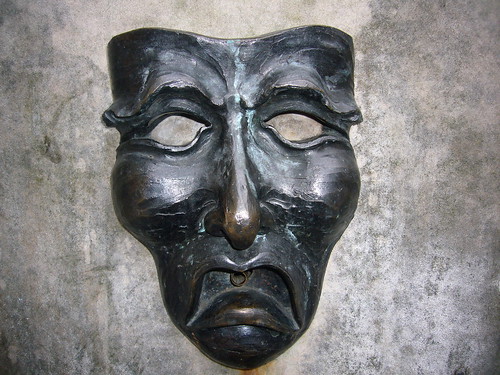
Image by Orin Zebest, via Flickr
An artist who is afraid to make mistakes is an artist who is stuck.
I used to volunteer to teach art at a local primary school. Sadly, by the age of 10, the majority of children had already slipped so far into perfectionism that their ability to make art was suffering. They had a very clear peeking order of who was good at art and who wasn’t and their definition of what constituted ‘being good at art’ seemed to revolve around not making mistakes.
So I devised a little exercise.
I asked them to paint a quick, colourful picture and while it was drying, I led a class discussion. I asked them whether they thought artists made mistakes? They universally agreed that if you were an artist that meant you didn’t make many mistakes and the better you were, the fewer mistakes you would make. I explained that, in fact, the very opposite was true and that someone who wasn’t willing to make mistakes wouldn’t be a very good artist. I explained that ALL artists constantly made mistakes but that they simply saw mistakes as potential opportunities.
Then, I asked them to tear up their paintings.

Image by milomingo, via Flickr
They stared at me in horror and disbelief. 'Rip them up’, I urged, ‘rip them up!’ Clearly still believing they would get into trouble, a few of the braver ones made tentative little rips. ‘That’s brilliant, do more’, I encouraged. Suddenly most of the class understood that they really did have permission to destroy their work and things dissolved into gleeful giggles and wild tearing. After several minutes of creative mayhem, I asked them to stop, take a few minutes to calm down and then to re-examine their pile of torn paper with a view to transforming it into a collage. The collages weren’t anything to write home about but it’s still the art lesson of which I’m proudest and in an age of constant exams and teaching to the test, I hope it stuck with at least a few of them.
“Creativity is allowing yourself to make mistakes. Art is knowing which ones to keep.” ~Scott Adams
Imperfection can be the pathfinder that leads us to new places IF we are willing to let go of our ego and put our trust in the wisdom of the work.
New techniques, new directions, new ideas; mistakes open up so many possibilities.

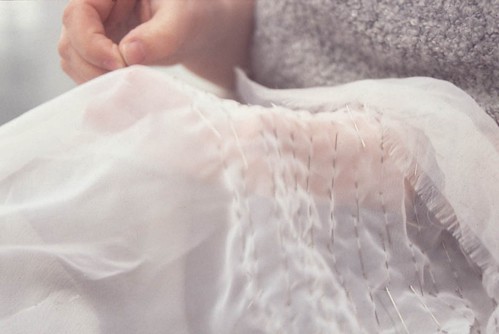
Image by pygment_shots, via Flickr
That tricky yarn that just refuses to work with any knitting pattern – what is it trying to teach you? Patience? Not to buy that colour combination again? Or is it challenging you to come up with a new stitch pattern that will make the most of its variegated repeats?
Is the ceramic glaze that bubbles in the kiln and ‘spoils’ the pot really a disaster? Or can you repeat and refine the process until you no longer have ‘a mistake’ but a unique signature style? What sort of surface are you left with if you sand back the bubbled glaze? Or if you crack the bubbles lightly with a hammer, add another layer of glaze and refire? Can you think of ten different things to try with your ‘ruined’ pot?
The painting that went wrong might lead you to a whole new series of work if you listen to what its telling you.
Ruined pieces often lead to new directions because there’s nothing left to lose. You’ve already used the materials and many of them can’t be reclaimed: the ink won’t go back into the bottle, the paper will never be pristine again. So why not let loose with some wild experimentation – rip it up, overdye it, splash bleach on, paint over it in gesso, turn it inside out and sew beads on it! Baring freakishly bizarre crafting accidents, what’s the worst that can happen? You were going to throw it out anyway.

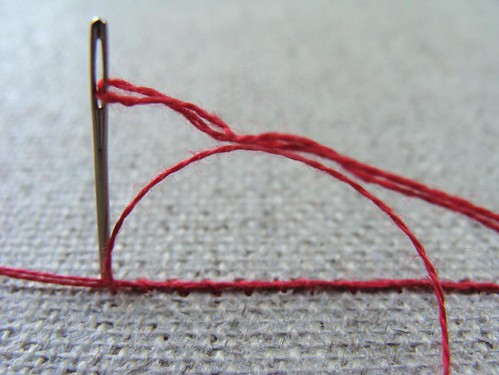
Image by LittleLexxis, via Flickr
Of course, all artists and craftspeople have their irredeemable failures that are fit only for the bin. The idea that seemed so great inside your head but wasn’t; the new technique that drove you up the wall; the brave attempt that was too far beyond your current skill level: our studios are stuffed with them!
But even these poor ugly objects have value. They were steps along your journey and they may have taught you far more than the pieces that went well.
Perhaps their only message is, ‘hmm, I don’t think woodworking is my thing’. But that is a very valuable lesson: now you have one less craft to master while you search for your ‘right thing’.
Or the lesson might be, “I am bad at this now but I enjoyed the process so much that I’m willing to invest the time, money and energy needed to become better.” And the second lesson might be, “so I shall keep this failed thing and in a year I’ll be able to see how far I’ve come.”

Image by carpocrates, via Flickr
“Creative people make a mess, clean it up and make another mess. There are no mistakes in art only happy little accidents.” ~Timothy Leonard
So drag out one of your failures (come on, I know you’ve got at least one lurking!) and challenge yourself to see it with fresh enquiring eyes.
Even if it can’t be reworked, experimented with or recycled, hold it in your hands and ask it what it can teach you. Ask yourself why it didn’t work. Try to find some tiny part of it that did work, even if the whole thing is a failure. A particular piece may be beyond saving but it could still hold the answers to your current creative dilemmas.
Don’t listen to your inner critic, listen to the work. What subtle whispers have you ignored because your ego got in the way, loudly declared, ‘that’s rubbish’ and tossed the thing in the corner in disgust?
An artist humble enough to learn from their mistakes is an artist who is moving forwards.
What have you learnt from mistakes and failures? Tell me in the comments...