10 Comments

I really appreciate the comments I get on this blog but I'm a bit lousy at answering them, as those of you who get a reply weeks or months later already know! I've been making an effort to catch up lately and while doing so, I was struck by the insightful comments I got on last month's Falling Off Beams post: it seems that I'm not alone in struggling to find a balance between life and art. Instead of answering the comments individually, I thought I'd quote them here and just for a bit of fun, I set myself the challenge of going to the sites of those who commented and trying to find an image that related to the idea of balance.

Vivien Blackburn wrote:

That description of childhood gym and the terror of that beam for an un-athletic child with no balance brought back memories for me!

me too

and yes, life is often like that

Vivien was easy; on visiting her site, I immediately spotted this beautiful charcoal drawing of an apparently impossibly balanced rock.


Vivien Blackburn: Rocks above Sennen Cove, Charcoal

iHanna wrote:

Thanks for writing what I’m feeling too Kristy! All those unwritten blog posts, all those things one plan and never will get to! :-)

calmness and chaos!

More chaos than calm by the look of it - iHanna's moleskine notebook is full and so is her brain!


iHanna: Image from Moleskine journal

Annalisa from Kaizen Journey wrote:

Well said! I feel as though I have been buffeted by conflicting forces for awhile now too, and like you said balance can be hard to find but the struggle for it is what makes life lively…

This was a tougher choice, I could have chosen some of Annalisa's lovely symmetrical shibori but in the end, I decided on this delicate floating image. Maybe on the days when balance feels hard we can all try to breath deep, lie back and just float a little?


Alsokaizen: In Solution

Daniel Sroka wrote:

I have a partially written post just like this one sitting in my blog’s Drafts folder. I believe that you may need the tension between what you have to do and what you want to do in order to move ahead with either. It is the energy created by the two, like a magnetic force, that pushes you forward.

Wise words there from Daniel, I shall try to keep them in mind the next time I'm beating myself up for not working hard enough. I knew I'd be spoilt for choice on Daniel's site and indeed, the problem wasn't finding something appropriate but narrowing it down to just one image.

Daniel Sroka: Flight

dryadart wrote:

good to know there are others struggling to make room in a “real” life for the art they must make… some days one feels so alone… balance, peace, space, wisdom, all such elusive and fleeting things, thanks for the post

I just loved this quirky drawing from dryadart. I enjoyed the sense that all the figures were slightly off balance, the centre figure in particular looks like she's about to fall.

Lee from Dancing Crow wrote:

thank you for a reminder that balance is not-falling, rather than any simple pose that can be maintained over time. I am flailing my workroom, trying to winnow and weed and return to the pristine space only things I really want to work on. An impossible task, of course, all the old projects and ideas are crowding about looking for a chance to be made (or finished) as well as new ideas…

And here's a perfect image from Lee to finish.


Lee: Untitled

Thanks to everyone who commented, I appreciated all your words of wisdom - although it did make me wonder if any of us are ever in balance? If you have any tips or tricks to finding a balance between your life and your art, then please let me know because it sounds as many of us could do with some help in that department!

12 Comments

Celia Richards is an artist living and working in Edinburgh. She removes the notes from sheet music to make installations that I find very poetic and delicious.


Celia Richards: Sheet music with the notes removed


Celia Richards: Notes from The Planets (for Two Pianos) by Gustav Holst

I particularly like her works using pianolo rolls because my grandad used to have one in his garage. He had a big box of the rolls and would let us sort through them to load into the machine. We were always awestruck by the undeniable magic of an instrument that played itself.


Celia Richards: Untitled

While exploring her website, I was delighted to find that she's also been using stitch on some of her pieces, including this darned pianolo roll.


Celia Richards: Untitled


Celia Richards: Untitled

There's more of her delightful work on her website and her Flickr pages. Thanks to the Rag And Bone blog for alerting me to her work.

1 Comment

"If you've done all your own mending, there's a heap of socks to be
looked over. Then I'll show you about darning the tablecloths. I do
hate to have a stitch of work left over till Monday," said Mrs.
Grant, who never took naps, and prided herself on sitting down to
her needle at 3 P.M. every day.

from Jack And Jill by Louisa May Alcott

I should be sitting down to my needle at 3pm every day but sadly I'm still unwell so apart from a tiny bit of drawing, I've not had the energy to make any art. I certainly haven't been able to start the new series of work I'm planning, which involves a lot of sewing. However, I have been researching mending and darning in preparation and I've come across a couple of artists who use darning as an intrinsic part of their work.

...............

San Francisco artist, Michael Swaine trundles around with a handmade sewing cart mending people's clothes and engaging them in conversation.


Michael Swaine: Sewing For The People

There's an interesting video showcasing his projects here. He was recently in Britain undertaking a new project where he documented and darned people's socks.


Michael Swaine: Darning Socks

That little box of thread and tools just makes me drool with longing - the neatness and particularity of it is very appealing to me.

His way of working instantly reminded me of my own Pin Ritual which uses pinning as a conduit for conversations about subjects like domesticity, repetitive labour and, almost invariably, people's grandmothers.

pin ritual 01
Kirsty Hall: Pin Ritual

Celia Pym is a British artist who spent a year darning holes in clothes for her degree show at the Royal College of Art.


Celia Pym: Mend

Unfortunately Celia doesn't seem to have a website, so I can't tell you much more about her although you can see more of her work, including some very lovely little ink drawings, here.

Both these artists were found on Treehugger, an interesting site focused on green issues. Although they don't have a specific art section, they do cover some contemporary art.

Other Darning Links

Prick Your Finger is an alternative haberdashery/knitting shop in London who have a fun blog that often mentions darning. They recently hosted Michael Swaine.

Jerry Barney from Fergus Falls in Minnesota recently wrote a charming post about finding a pair of socks that his mother had darned.

My Front Porch has been darning a sweater, while Kate from Needled repaired some jeans with the help of a vintage book.

I found the diagrams on this 'how to' page about Pueblo darning and mending quite delightful.

...........................

If anyone knows of any other artists who are working with mending or darning, do let me know because I'd love to hear about them.

18 Comments

The blog has been quite text-heavy in the last few days, so here's an image-based post for a bit of balance.

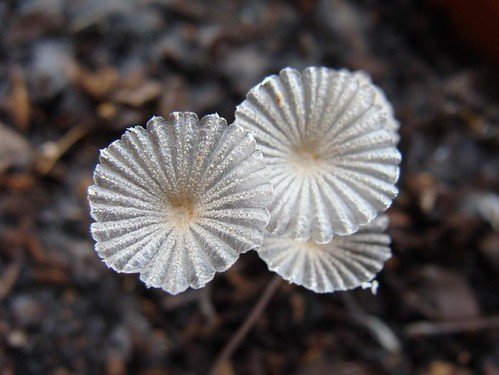
A couple of weeks ago I planted some coriander seeds that I'd harvested from the plant in my window box. The plan was to have some growing inside over the winter but I don't think it's working since all I seem to be getting is a fine crop of admittedly inspirational mushrooms!

The compost was obviously shot through with mycelium. These come up in little clumps of two or three mushrooms and they only last a day or two at most before they crumple into nothingness.

Kirsty Hall, photograph of 3 tiny translucent fungi
Kirsty Hall: Fungi, Sept 08

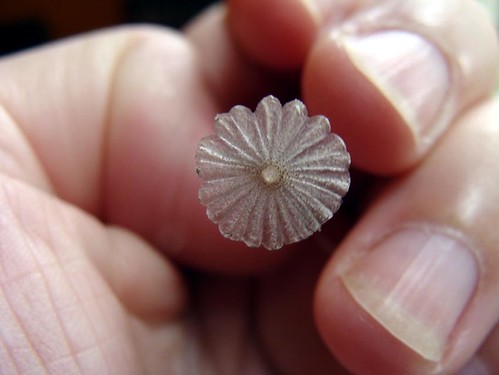
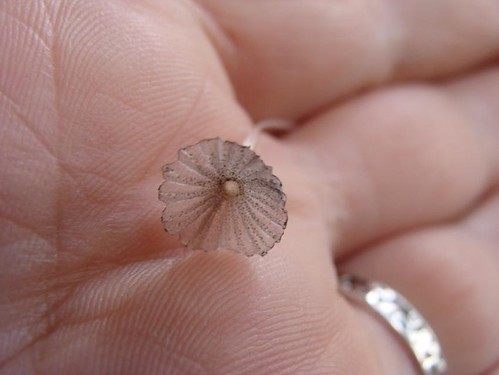
In these two shots, you can see how tiny and translucent they are. I was sure this would disintegrate as soon as I picked it up but although it was fragile, it was stronger than it looked and I was able to delicately hold it while I photographed it.

Kirsty Hall, photograph of tiny translucent fungi on palm of hand
Kirsty Hall: Fungi, Sept 08

Kirsty Hall, photograph of tiny translucent fungi on palm of hand
Kirsty Hall: Fungi, Sept 08

Looking at these I was reminded of the incredible mushroom drawings by Chris Drury.

Here is his description of how he makes them:

If you cut off the stem of a mushroom and place it on a piece of paper overnight, covered with a bowl, it will drop its spores onto the paper in the pattern of the gills. The spore print here is digitally scanned and printed in three versions and altered by changing the contrast in Photoshop. The prints are glued and ironed onto the canvas which is built up in layers of gesso to form a surface for writing.
This radiating pattern of spore lines draws you in as a mandala would, but if you take a magnifying glass and follow one line from the centre out to the periphery then you will notice that each line branches and branches again like the limb of a tree. In making these densely written works this is in fact what I do: I follow the principle of the line that branches, only in densely hand-written words, in inks of different tones, with reed pens of different thickness, gathered from the banks of the river (everything flows here) and which have to be constantly sharpened and dried. The written words are repeated and hypnotic, like a mantra. The words cease to have meaning, the concentration is on the sound. A word that has a good sound is easy to write. It flows on to the canvas. The concentration is on the sound, the shape, the size, the colour, the tone, the branches. The words are the mantra that shape the mandala.


Chris Drury: Destroying Angel – Trinity

Chris Drury, Destroying Angel, mushroom spore print and drawing
Chris Drury: Destroying Angel – Trinity
White printed spore prints and radiating lines of text in white ink and pencil on black prepared canvas. Text reads: 'Amanita virosa- Destroying angel'

Needless to say, I adore the obsessiveness and repetitiveness of this process! Imagine doing all that writing, and these aren't small pieces - each canvas is 187cm square. I wonder if he ever makes spelling mistakes? If I was writing something over and over like that, I know I would start losing all sense of the words and I would start getting them wrong. It reminds me of the sort of obsessive use of writing that you sometimes see in Outsider Art.

I've been a fan of Drury's work since I saw his 'Medicine Wheel' piece in Leeds City Art Gallery. That piece - a circular collection of natural objects collected daily for a year - was a definite influence on my Diary Project.

Chris Drury, medicine wheel, circular sculpture of natural objects collected over a year
Chris Drury: Medicine Wheel

Unusually for a well-known artist, Drury not only has his own web site but he even writes a blog. A recent exhibition at the Nevada Museum of Art also has an associated blog by the gallery staff and they even have sets on Flickr.

I'm quite delighted by this. I constantly meet artists who don't have any web presence and don't grasp why this is a problem: I often end up doing five minute impromptu versions of my articles about how artists can use the web. Many famous artists don't even seem to have their own dedicated sites. Seriously, what's up with that? Surely they can afford to pay someone to do it. Hell, if I can do it, surely Damien Hirst can manage it! What's the matter, Damien, did someone pinch 'damienhirst.org' out from under you? I can only assume that they think it's unimportant or perhaps it's seen as a bit too democratic or something - I don't know why it happens but I find it very odd.

So it's fantastic to see an established artist and a big institution using blogging and the net to directly engage with their audience and I hope other mainstream members of the art world will eventually follow suit. I know lots of galleries have websites but I often get the sense that they don't quite 'get' the web; I think many of them still think in terms of the old models of top-down publishing. Hmm, something else to research and think about...

12 Comments

Katherine from Making Your Mark left a detailed comment on yesterday's blog post that I'm going to address here because she raises some important points.

[Katherine's words are in italics.]

First - I too would have been very annoyed at the tenor of the comments you quoted. (BTW your link for the politician is ‘dead’). It did seem rather generic and sterotyped to me.

Thanks for alerting me to the broken link, Katherine, I fixed it - see what happens when you write impassioned blog posts after midnight!

Second - the Arts Council has been criticised for its last round of grant-giving and there has been an investigation and a report into the chaos which ensued. The report was published at the end of July.

Katherine linked to the report, which is here if anyone wants to read it.

Now on to the meat of what Katherine has to say:

As somebody who, a very long time ago, used to sit on the other side of grant giving machinery (some of which involved the arts) I can tell you that if there wasn’t a fee to pay to process the grant, there would be a whole load more applications from people without serious intent. The net effect of that would be that they would still need to be processed and that would mean money intended for arts would need to be diverted into administration. Administrators, if faced with this sort of situation, then end up devising ways of quickly scuttling applications to whittle them down to a serious few.

Fees are a crude way of diverting those who aren’t serious - but they generally work.

When I was talking about fees, I was only referring to fees for applying for exhibitions, not application fees for grants. Art Council England does not currently ask applicants to pay application fees but it's possible that other funders might. This makes sense since Arts Council officers are already employed to do things like read applications. I can see a case for independent funders such as charities levying an application fee if they are in a situation where they'd otherwise be deluged by applications that they can't afford to process but since I rarely apply for funding, I've no idea if it's a common practice.

I have slightly more tolerance for paying an application fee for a grant application than I do for paying a curator to look at my work, which is what a non-refundable application fee to an exhibition amounts to. In the later case, I think that galleries are exploiting artists as a convenient funding stream. I think it's a lazy and cynical ploy but artists are often so desperate for exposure that they tolerate it. I don't mind shouldering some of the costs ONCE I'M SELECTED but I object strongly to subsidising galleries and other artists by paying a fee just to have my application looked at.

Incidentally, if any gallery owners or arts administrators feel they can justify this practice of charging artists non-refundable fees to apply for exhibitions, I'm happy to give you a platform on this blog to do so - drop me an email.

I understand and accept Katherine's argument that some funders may end up spending all their funding on administration instead of actual funding, although I'd suggest that they might want to address the structure of their own organisation before using fees as a form of screening. Whether I was personally prepared to pay a fee for a funding application would depend on many issues, including how large the fee was and what percentage of applicants were funded. However, from my limited experience in filling out funding applications, most funders seem to prefer to weed out applicants by making the forms long and tedious! Katherine addresses this issue next:

The forms might also be complex - but similarly they tend to test out whether people have really thought through their idea - or whether they just have a good idea which they really need to go away and work on some more.

I agree with Katherine here. Although I loathe filling in any sort of form and the Arts Council forms make me cry, I have found them useful in defining the project that I was seeking to have funded. It can be very illuminating to be forced to analyse what you're trying to do; who and where your audience is and how you're going to attract them; what benefits your project will have for the wider community and what your definitions for success are.

Sure, it's not fun but it can be worthwhile so I don't mind that. What I do strongly mind is the idea that it somehow isn't work. I feel there is a definite cultural bias towards anything artists do being regarded as Not Real Work simply because it's artists who are doing it. This attitude was quite clearly displayed in the comment I took issue with yesterday. Apparently the person in question believes that artists sit around looking pretty and people throw money at them. Hahahaha, if only!

If I design posters, business cards or spend hours on the computer writing up grant proposals why is this somehow miraculously Not Work? If I spend ages working on my website is it Not Work just because I'm an artist? If I spend hours beavering away at something in the studio is it Not Work just because I don't have an immediate buyer for what I've made?

I think this is partly ignorance - most people have no real idea of what artists do all day and many of them would be hocked if they saw the level of detail involved in an Arts Council England funding form or had to wade through the huge tomes of alternate funders with their myriad of different requirements. Anyone who has managed to get funding has invariably jumped through umpteen hoops to secure that money.

Part of the problem is that much of what artists do is speculative and the financial benefits are not immediately apparent or forthcoming. You apply for an exhibition that you might not get into; you apply for a grant because even if you don't get it, it gets your name in front of the funders and that could pay off in the future; you edit your photos because some day you'll need them for applications or magazine articles; you make work that you hope you'll be able to find a venue for... and so on and so forth. So it's not a simple 'effort in = money out' equation and a lot of people don't understand our motivations to keep slogging away at something that we don't get paid for. Like I said yesterday, some days I don't understand it myself! But that's just how it is. Unless you're working solely to commission, most artists follow some version of this 'just get on and make the work and hope the money follows' system at some point in their careers.

You’d be really surprised how many people want to be given money without putting any sort of real effort into making a good case. Seriously.

Sigh, unfortunately I probably wouldn't be surprised at all. When I was curating, I received some absolutely dire applications where it was clear that the person either couldn't be bothered or didn't have a clue what was required. And I was only asking for slides, a CV and an artists statement, which is nowhere near as complicated as a funding form.

I think that anyone who expects to snap their fingers and get public or private funding for any project, art-related or not, is staggeringly naive but a couple of rounds of filling in forms and writing endless begging letters ought to be enough to open their eyes. I remember talking with one of my tutors at art college and he said that a lot of initially promising projects that he was involved with floundered at the funding stage. Hearing that from someone who was relatively well established made it a lot easier when I got my first rejection letters from potential funders.

Finally, I don’t know any business which doesn’t incur marketing costs to get business and generate income. I’ve always seen time spent on grant applications and fees as exactly that - part of the normal cost of doing business. I don’t know why artists should expect to be let off ‘normal costs’ just because they’re artists.

I don't believe that artists should be let off costs simply because they are artists and I also regard applying for opportunities as a necessary part of the costs of being an artist. However, the economy of the arts are undeniably weird. In what other business do so many people work for free so much of the time?

Hell, most of us spend money just being artists. I remember reading years ago that the average annual baseline costs for operating as an artist (studio fees, business expenses, materials etc) was about £5,000 - I imagine it's gone up considerably since then. I have a studio at home partly so that I can afford to be an artist without a part time job yet my costs (art materials, printer ink, web hosting, exhibition costs and travelling expenses to shows etc) still average a couple of thousand pounds most years. And I'm not using a lot of expensive materials...

This would be fine if the arts were well paid and sheer hard work was enough to ensure success but I'm guessing we all know how that one goes!

So - bottom line. I agree with you - lots of artists exercise a whole load of skills other than their talent to try and make art work for them. On the other hand, any artist or organisation which factors in the costs of being business-like into the total equation is far more likely to succeed.

I totally agree and I think that anyone who goes into the arts expecting fame, fortune and everyone to fall at their feet is in for a very rude awakening. As artists we all need educate ourselves about the various financial options available to us. It's vitally important to work out where you fit and what you're comfortable with doing to fund your practice. But that's a discussion for another day because it's probably at least half a dozen blog posts!

5 Comments

The Canadian author and well known knitter, Stephanie Pearl-McPhee has just written a searingly polite but vicious post about the recent obnoxious comments about the arts made by Canadian Prime Minister, Stephen Harper.

The comments on Stephanie's blog were mostly supportive of the arts but one comment really got my goat because it betrayed such a profound lack of understanding about the realities of working in the arts.

Tonja wrote (cut to show the relevant parts, spelling in context):

"I, also being a relative "average" citizen as yourself, find it extremely irritating when artists of all sorts feel that it is their "right" to be a snob about their art. What I mean is this: I am using my God-given talents to the best of my ability, and while they are not astronomically brilliant, I have to work to provide a living for myself. I am using my TALENTS to provide for my LIVING. Operative word: work - and I work hard. I find it resentful when artists feel that thier talent should entail them to life's finer side of life simply because their painting (which sometimes I feel I could replicate easily) or their violin playing (which I could possibly mimic by whistling) is "talent". Pure talent is not an entitlement - and this is what I felt that Mr. Harper was saying - that there are those of us "average" citizens who work hard and labor for our livings while there are people - "artists" - who feel that they don't have to work simply because of their "talent". Having a subsidy is not work, it is a privilege that they receive as a recognition for their talents, therefore those artists that receive such subsidies should be grateful."

Here is the response I posted on Stephanie's blog:

Ah, clearly spoken by one who has never gone through the hell of filling out an arts council grant form!

Tonja, who are all these artists you know who sit around twiddling their thumbs and expecting to be funded? Because I work in the arts and everyone I know is a) skint, b) working far more hours a week than most people and c) doesn't get holidays, sick leave or any benefits. Most of them DON'T get grant funding and those who are lucky enough to get funding spend weeks or months putting together highly detailed funding applications and scrabbling around for every single penny.

Most of the artists, writers, musicians and theatre people I know need to work two jobs - their art job and then the job they have to do to pay the rent. I believe that the majority of the artists in the US have no health insurance and I know for certain that the majority of artists in the UK have no pension, not because we're too lazy to work and sit around expecting our talent to somehow miraculously translate into money but because the arts are appallingly badly paid. Often the artist is the one person in the equation who gets nothing. Are you regularly expected to work for no pay? As a fine artist, I am! People expect me to put in written proposals for free, I am expected to pay my own way when I enter shows, hell sometimes I'm expected to pay an application fee for the privilege of even applying for a show! In the last six years as an emerging artist I've never been paid and I've have had travelling expenses ONCE.

Talent means NOTHING without a great deal of hard work and there are damn few folk in any area of the arts who haven't 'paid their dues' by spending YEARS working very hard for very little financial reward before 'suddenly' becoming famous.

..................

Are there pretentious idiots in the arts? Hell yes! Undoubtedly there are those in the arts who don't do the rest of us any favours but every industry has its stereotypes (Lawyer jokes, anyone? And what about those arrogant doctors?) and I'm sure there are people in every industry that make their peers cringe.

I know that many people don't 'get' what we do and sometimes we don't explain it very well. Heck, some days I don't get why I do it either! But I am incredibly fed up of people assuming that artists don't work, that artists expect to be funded and moan when we aren't.

Oh OK, so artists do moan about funding but come on, everyone moans about the 'upper management' in their jobs, don't they? Artists moaning about the Arts Council (or local equivalent) is mostly just our version of standing around the water cooler bitching about those idiots in Accounts!

I've certainly never expected to get funding from anyone and I know very few people in the arts who do: as a rule, we're all extremely aware just how fragile, random and incomprehensible the funding system is. I've never applied for an individual grant from the Arts Council England but I have been involved in two groups who got tiny sums for a couple of projects and believe me when I say that those couple of hundred pounds were very hard won - I could probably have earned much more in far less time if I'd gone and stood on a street corner!

Right now there are a lot of very hard-working, unpretentious and worthwhile arts organisations in Britain who are hurting because the Olympics have resulted in widespread funding cuts to the arts (despite our government saying that 'no, no, of course money wouldn't be taken from the arts to pay for the Olympics). In the last year I've noticed the number of opportunities advertised in [AN] Magazine has absolutely plummeted although whether this is related to the credit crunch or funding cuts, I'm not sure.

It's not just the visual arts either, I know several writers and they're freaking out about the state of the publishing industry. There are currently lots of changes happening in the way that the arts are organised, distributed and paid for and many of us at the bottom of the arts hierarchy - i.e. those of us who actually make the art - aren't doing at all well.

So no, we're not sitting around waiting for taxpayers to fund us and expecting that our 'talent' will see us through. Most of us are out there working a second job and/or choosing to survive on very little so that we have more time for our art (I have to do my taxes next month - yet another year where I won't even have made enough to pay tax) and wondering if we'll ever get out of debt...

6 Comments

LOST: ONE ART MOJO
If found, please return to Kirsty at Up All Night Again.

Sorry for the lack of posting folks, I've been down with a virus for the last few weeks. Needless to say, there hasn't been a shred of art going on. I always know when I've got something else on top of rather my usual Chronic Fatigue because I stop wanting to make art altogether. With this bug I didn't even want to potter around on the internet much, which is almost unheard off! Instead I've mostly been reading or knitting when I've not been in bed.

Thankfully I'm starting to feel a bit better and I hope to be back to my regular posting schedule within the next few days. In the meantime here are some autumnal photos to tide you over.

..............

I am always surprised by how red bramble stems can be.

Bramble Stem
Kirsty Hall: Red Bramble Stem, September 2008

I shot a whole load of this spider web. I was shooting directly into the sun and this is my favourite because it has just the right amount of glare.

Sunlight on broken web
Kirsty Hall: Sunlight on broken web, September 2008

The late afternoon sun made this tree glow with colour
Kirsty Hall, photograph of tree bark
Kirsty Hall: Tree Bark, September 2008

This wasn't a set up shot; I just spotted this fallen leaf on the bonnet of a car perfectly framed within the dark reflection of the tree above.

Kirsty Hall photograph of a bronze leaf on a black car with reflection of tree
Kirsty Hall: Bronze leaf/Black car, September 2008

Does everyone call horse chestnuts fruit 'conkers' or is that just a British thing? They are one of the ultimate harbingers of autumn for me.

conker shell
Kirsty Hall: Conker Shell, September 2008

The late afternoon sun looked incredible through our very grimy windows - sometimes muck and poor house-keeping is just so pretty!

Hazy window
Kirsty Hall: Hazy Window, September 2008

..............

How apt, just before I posted this, my itunes started playing the Lucinda Williams track, I Lost It, which has the following lyrics:

I think I lost it
Let me know if you come across it
Let me know if I let it fall
Along a back road somewhere
Money can't replace it
No memory can erase it
And I know I'm never gonna find
Another one to compare

Let's hope that art mojo is making it's way home because although I love reading, knitting and the wasting far too much time on the internet, I certainly won't find another obsession that annoys, infuriates and fulfils me in the way that my work does!

12 Comments

Autumn is suddenly very much here (hey, what happened to our non-existent summer?) and I have been gleaning.


Jean-François Millet: The Gleaners, 1857

OK, not literally gleaning from the fields but definitely harvesting.

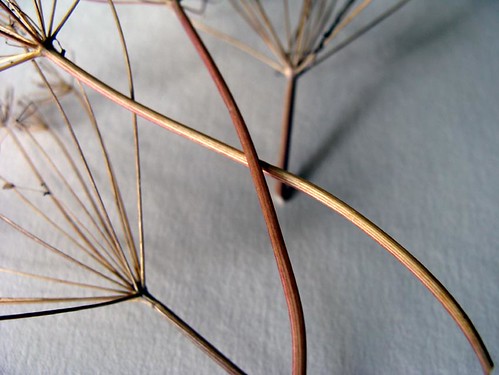
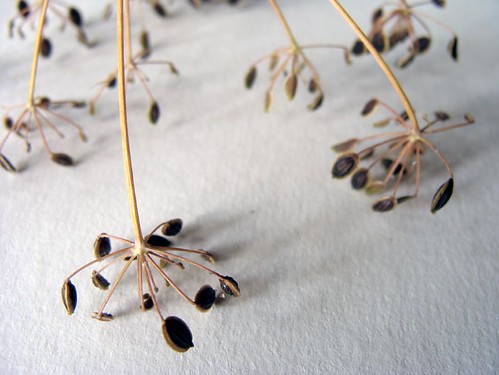
Several days ago I pulled up the dying dill plant in my windowbox of herbs, cut off the fragile seed heads and sat them in a bowl to dry.

Dill Seedheads
Kirsty Hall: Dill Seedheads, Sept 2008

Dill Seedheads
Kirsty Hall: Dill Seedheads, Sept 2008

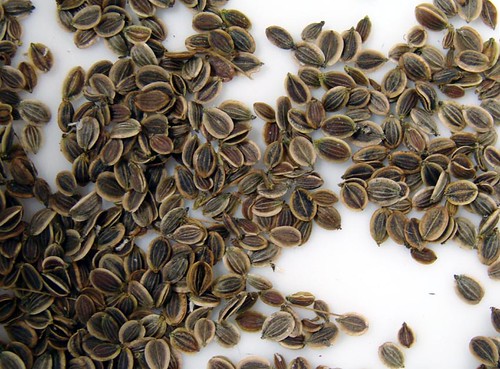
Yesterday morning I sat, half asleep, and gently plucked aromatic seeds from tousled umbels. The ripe ones fell off easily, any that felt silky under my fingers I left to dry out further.

Dill Seedheads
Kirsty Hall: Dill Seedheads, Sept 2008

I ate one at the end of the task and the taste exploded in my mouth - one small seed so much stronger than a handful of the leaves.

Dill Seeds
Kirsty Hall: Dill Seeds In Bowl, Sept 2008

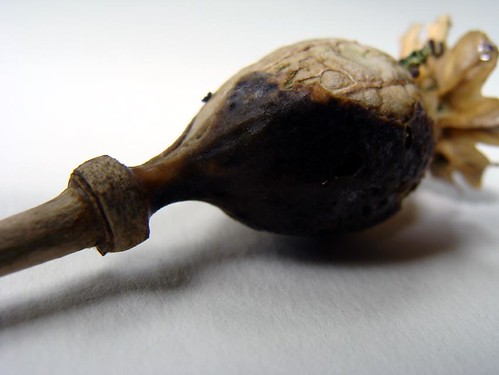
This morning I collected seedheads from the two poppy plants that arrived unannounced in my garden - in entirely the wrong place naturally! I cut them over a bowl to catch the tiny black seeds that spill everywhere with the slightest provocation.

Poppy Seedhead

I have been gleaning in my art as well. I am in a research phase so I've been reading a lot, using tiny scraps of paper to mark pages and then transcribing found words, phrases and ideas into my sketchbook. I've been searching through my boxes of images looking for just the right combination of visual information and trawling through ebay for the materials I need to start my next project. All seeds that will grow into something new.

Everywhere in my life; gleaning, gathering, hunting, harvesting, searching and storing.

13 Comments

I thought I'd write about balance today. It's supposed to be my 'word of the year' but I don't feel I've been very focused on it or that my life has been very balanced in these last 8 months.

I remember walking along the beam in gymnastics when I was in primary school. It was simply an overturned wooden bench with a thick, solid cross-beam and it was probably only about 30cms from the floor but it might as well have been a rickety log above a raging torrent as far as I was concerned! I never felt safe on that beam and I often fell and had to go back to the start and try again. I was not an athletic child and my balance was never great. Of course, I might have done better if my imagination hadn't been soaring above me, so that I was secretly half convinced that I was a spangly circus star on a terrifyingly thin wire suspended above a gasping crowd.

Last Monday my son returned from his summer in Scotland and the rest of the week was spent getting ready for his return to school on the Thursday. It's always a bit of last minute scrum of haircuts, laundry and new school shoes and I'm sure that I'm not the only artist mother who has found her art falling by the wayside on the week that term starts. Some weeks, life simply takes precedence and art has to be shoved aside.

This week we should settle back into a normal term-time routine and at last I'll have more studio time but even though it's positive, these transitions still hit me hard. This year was even more stressed than usual because due to illness, my son hadn't been in school since Christmas. Fortunately he made it back without incident and although I have a lot of residual anxiety, things seem (fingers crossed!) to be OK now.

It recently occurred to me that I secretly believe there's a perfect life/work balance that can be miraculously attained and then indefinitely and effortlessly maintained. Whereas in reality, I'm still this distracted kid who constantly falls off the beam and has to go back to the beginning. When I'm parenting, I feel slightly irked that I'm not making my art but when I'm making art, I feel slightly guilty that I might be neglecting my parenting. It's never a perfect balance: I am always on the wrong end of a see-saw or spinning frantically on a roundabout feeling sick and wishing I could jump off.

And in truth, that's how it is for all of us because balance isn't balance if you can't fall. To be mutable, unstable and ever-changing is simply the nature of balance - if a thing is steady, immovable and fixed then there's no need for balance at all. And whose life is steady, immovable and fixed? Certainly not mine!

In my more enlightened moments, I understand this but enlightenment - like balance - constantly slips from our grasp. So here we all are, balancing on our thin little lives and constantly shifting our weight from one side to the other. Maybe we're smoothly adjusting to the airflow around us or maybe we're juggling plates on the high wire, frantically wobbling and worrying that we are about to fall off!

I once saw a short film that involved a man standing in front of a sign. One arrow of the sign was labelled ART while the other, which pointed in the opposite direction, was labelled LIFE. The man hovered indecisively and anxiously between them, running off first in one direction and then a moment later running back the other way. Back and forth he went at varying speeds and for varying lengths of time, occasionally slumping against the sign in utter exhaustion. Art/life, life/art: a constant struggle, a constant search for balance. The audience, largely made up of artists, was in fits of laughter, all of us clearly experiencing comedy of recognition.

As I grow older, I realise that, as John Lennon said, "life is what happens while you are making other plans". This is my life: this muddle of half tended garden plants; a child who needs new school trousers (even though he said he didn't!); a messy, neglected studio; a house in a state of flux from bouts of decluttering; emails left unanswered; blog posts unwritten; a head full of half-baked art ideas and always more things on my to-do list than my health can truly handle.

Yet I still walk across that beam every day; some days feeling the cavernous drop beneath my feet, some days seeing that I am really only 30cms from the ground and perfectly safe. And I think perhaps you do too...

8 Comments

Whilst reading this month's Art World, I noticed that two of the artists I was most taken with were both shown by the Kate MacGarry gallery in London. It turns out that the gallery has quite an interesting roster of artists, including several who use fabric in a fine art context, which is always good to see. However, the artist I am most impressed with (and the reason I bought Art World magazine in the first place) is Matt Bryans, a London based artist who works with simple everyday materials like newsprint and aluminium foil.


Matt Bryans: Untitled 2006, erased newspaper cuttings.
Unknown photographer

I wish I'd made these incredible erased newspaper works. Bryans collects discarded newspapers, cuts out the photos and then partially erases them. The combination of the act of physically erasing - a process that's been interesting me for a while now - with the intrinsically ephemeral nature of newspapers on their daily journey into oblivion is very seductive to me. I love the idea of taking paper that is already thin and cheap and making it even more fragile by rubbing away at it. A bit of an art conservationist's nightmare, of course, since woodpulp newspapers are notoriously weak and filled with acid but how wonderful that the results are these visually strong, hauntingly strange and eerily poetic works.


Matt Bryans: Untitled 2008, erased newspaper cuttings.
Image by Oak Taylor Smith


Matt Bryans: Untitled 2004, erased newspaper cuttings.
Unknown photographer

Looking at them, I was reminded of the cultural violence of the Reformation which destroyed so much Catholic art in Britain and remains a huge scar across British art history. It's not unusual to visit churches and find empty plinths where statues of saints once stood or sculptures and paintings where faces have been scratched or chiselled out or painted over.

Bryans is clearly a very process-based artist - his huge rolled ball of aluminium involved four people rolling a massive 27km of foil for 8 days, apparently it was quite difficult to stop it forming a square. I love the absurdity of taking metal that has been deliberately made into thin sheets and then reforming it into a large, heavy solid object by hand. Of course, he could have melted and then cast the aluminium foil into a perfect sphere but it's the laborious hand rolling aspect that really makes this work for me.


Matt Bryans: Untitled 2008, aluminium foil.
Image by Oak Taylor Smith

His smaller aluminium wall works were made by rolling foil into balls, melting them and then hitting them with a hammer to flatten them before soldering the hundreds of resulting "fragile but surprisingly heavy" circles to the wall.


Matt Bryans: Untitled 2008, aluminium foil.
Image by Oak Taylor Smith

He's showing at Kate MacGarry from 17th October to 23rd November, I shall have to make an effort to get over to London to see it.